If you want to understand the Quran without relying on translations, or help your child connect with their daily prayers, you have likely asked: should I start with Quranic Arabic or Modern Standard Arabic (MSA)?
It is one of the most common questions our instructors receive at OQTutor from adult reverts, heritage speakers, and Muslim parents living in the West. Both branches share deep historical roots, yet each serves distinct learning objectives.
Learn Quranic Arabic first if your goal is to understand the Quran, Salah, and Hadith. The 300 most frequent Quranic words make up roughly 70% of the words on any page of the Mushaf. Choose Modern Standard Arabic (MSA) first if you want to read contemporary news, travel, conduct business, or work in the Arab world.
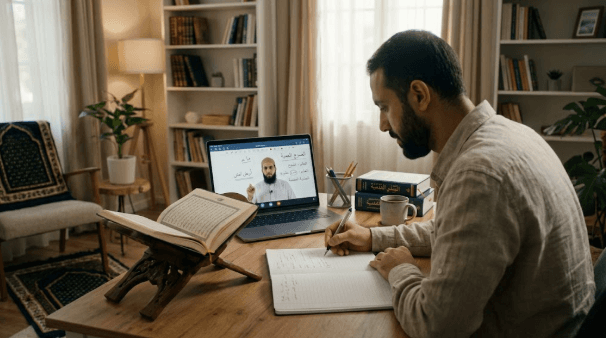
What Is the Difference Between Fusha, Classical Arabic, and MSA?
Quranic Arabic and Modern Standard Arabic are not two separate languages. Both are recognized forms of Al-Fusha (الفصحى), the formal, standardized, eloquent Arabic, as opposed to regional spoken dialects (known as Ammiya or Darija) such as Egyptian, Levantine, Moroccan, or Gulf Arabic.
Think of Fusha as the strong trunk of a grand tree with two primary branches spreading from the same linguistic foundation:
1. Quranic (Classical) Arabic (فصحى التراث - Fusha al-Turath)
Quranic Arabic is the divine language of the Holy Quran, revealed over 1,400 years ago. It forms the pristine standard of Classical Arabic—the language of the Prophetic Hadith, early Islamic jurisprudence, and classical scholarship.
2. Modern Standard Arabic (MSA) (فصحى العصر - Fusha al-Asr)
MSA was standardized throughout the 19th and 20th centuries during the Nahda (Arab Renaissance). It is the shared literary, journalistic, and diplomatic language across the 22 Arab League member nations today.
The Fusha Arabic Language Tree
How Classical Quranic Arabic and Modern Standard Arabic emerge from the same trunk (Al-Fusha), distinctly separated from regional spoken dialects (Ammiya).
Quranic & Classical Arabic
فصحى التراث (Fusha al-Turath)
- Holy Quran & Prophetic Sunnah
- Fully voweled (Complete Tashkeel)
- Spiritual, ethical & Tafseer focus
- Unchanging divine preservation
Modern Standard Arabic (MSA)
فصحى العصر (Fusha al-Asr)
- 22 Arab League nations & media
- Generally unvoweled in print
- Modern vocabulary (tech, politics)
- Shared diplomatic language
The Standard Literary Trunk: Shared Grammar (Nahw) & 3-Letter Root System (Sarf)
Side-by-Side Comparison
Compare key parameters including primary objectives, vocabulary breadth, grammar constructs, and realistic timelines:
| Feature | Quranic (Classical) Arabic | Modern Standard Arabic (MSA) |
|---|---|---|
| Primary Goal | Understanding the Quran, Salah, Duas, and Hadith | Reading, writing, and formal speaking across the modern Arab world |
| Core Vocabulary | About 77,430 total word tokens in the Quran, constructed from approximately 1,700–1,800 roots | Tens of thousands of active modern words (covering politics, technology, economy, diplomacy) |
| Vowel Markings (Tashkeel) | Fully VoweledPreserves exact divine pronunciation and morphological case endings | Mostly UnvoweledUnvoweled in newspapers, books, and signage beyond the absolute beginner stage |
| Grammar (Nahw & Sarf) | Fuller use of classical rhetorical constructions (Balagha), emphatic particle shifts, and classical dual forms | Identical foundational grammar rules, but with simpler, streamlined modern journalistic sentence structures |
| Skills Emphasis | Reading comprehension, root recognition, and active listening during prayer | Equal focus on all four language competencies: reading, writing, listening, and conversational speaking |
| Noticeable Results | About 4–6 months (due to rapid word recurrence in prayer) | About 9–18 months (a much broader vocabulary pool is required) |
*Note: Timelines are realistic estimates and vary with lesson frequency, age, previous recitation proficiency, and dedicated daily practice.
3 Key Differences Every Beginner Should Know
1Vocabulary Efficiency (The 80/20 Rule of the Quran)
This is the decisive factor for adult learners and busy parents. A typical introductory Modern Standard Arabic course spends its first months teaching words like airport (مطار), passport (جواز سفر), coffee (قهوة), engineer (مهندس), and library (مكتبة). While helpful for a flight to Dubai or Cairo, none of these words appear in the Holy Quran.
In contrast, Quranic Arabic is exceptionally concentrated. Many sacred words repeat hundreds—or even thousands—of times:
Top ~125 Words
Account for roughly 50% of the total words on any typical page of the Mushaf.
Top ~300 Words
Account for roughly 70% of the entire Quranic text across all 114 Surahs.
If your goal is spiritual connection, starting with Quranic Arabic prevents learner burnout because you immediately recognize the words you study in your five daily prayers, Friday Khutbahs, and nightly recitation.
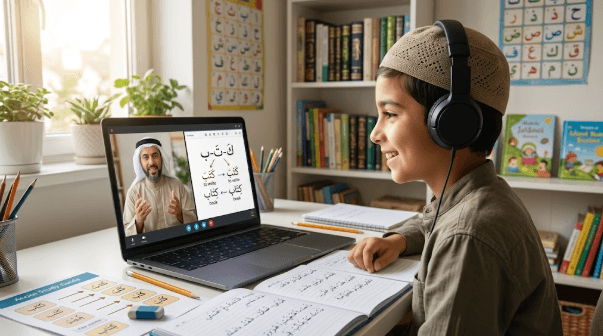
2Grammar and Sentence Structure (Nahw & Sarf)
Both branches share the exact same structural engine: Nahw (syntax) and Sarf (morphology) built around three-letter root words (such as K-T-B for writing, or R-H-M for mercy).
However, Quranic Arabic employs the fullest depth of classical rhetorical devices (Balagha). For instance, it frequently shifts word order to establish divine emphasis (Hasr / Qasr), such as in Surah Al-Fatiha: “Iyyaka na'budu” (“You alone we worship” rather than the standard grammatical order “We worship You”). Emphatic verb endings (Noon al-Tawkeed) and dual grammatical forms (huma, antuma) appear far more regularly in the Quran than in modern news articles.
A dedicated Quranic Arabic curriculum teaches grammar through real Quranic Ayahs rather than contrived everyday textbook dialogs, allowing learners to understand the spiritual and theological reasoning behind grammatical shifts.
3Pronunciation and Tashkeel (Diacritics)
In the Holy Quran, changing a single short vowel mark (Fatha, Kasra, or Damma) can dramatically change a word's grammatical case and theological meaning. This is why Quranic Arabic is inseparable from foundational phonetics (Noorani Qaida) and the science of proper articulation (Tajweed rules).
In Modern Standard Arabic, native speakers and intermediate students read text completely devoid of vowel markings, deducing grammatical roles from contextual clues. For beginners learning the Quran, complete Tashkeel ensures you never recite an error that alters the meaning of Allah's speech.
Which Should You Learn First? A Decision Guide
Use the criteria below to determine whether Quranic Arabic or Modern Standard Arabic aligns best with your personal goals:
- You can already read the Arabic script (or are completing Noorani Qaida) and want to understand what you recite in prayer.
- You are a busy working adult, student, or revert seeking the fastest, most direct route to comprehending Surah Al-Fatiha, Juz Amma, and daily Masnoon Duas.
- You or your child are enrolled in Hifz (memorization). Understanding word meanings drastically improves retention and prevents confusing similar verses (Mutashabihat).
- You want your child to become fully bilingual—capable of speaking, writing, and conversing in formal Arabic alongside modern academic subjects.
- You plan to relocate, study, conduct business, or travel throughout Arab nations and need practical conversational and reading skills.
- You intend to read contemporary Arabic non-fiction, political commentary, modern Islamic journals, and follow live Arab media lectures.
You do not have to choose forever. Because both varieties share the exact same root system and foundational grammar rules, starting with Quranic Arabic gives you an immense head start on MSA later—all while granting you the immediate spiritual blessing of understanding the words of Allah from your very first weeks of study.

The 4-Step Roadmap to Mastering Quranic Arabic
At OQTutor, our certified scholars employ a structured pedagogical progression so students never encounter overwhelming grammar rules before they can comfortably read:
Master Script and Phonetics
Learn individual Arabic letters in their isolated and connected positions, vowel markings (Fatha, Kasra, Damma, Tanween), and pronounce them from their exact anatomical points of articulation (Makharij).
Build Fluent Recitation
Apply essential elongation (Madd), nasalization (Ghunnah), and stopping (Waqf) rules to read smoothly from the Mushaf without hesitation or phonetic stumbling.
High-Frequency Words & Roots
Master the top 300–500 most repeated Quranic words and understand how the 3-letter morphological root system unlocks hundreds of unfamiliar derivatives on sight.
Apply Grammar Through Juz Amma
Examine nouns, verbs, prepositions (Harf), and sentence patterns directly through the short Surahs recited every day during Salah.
Frequently Asked Questions
Common questions answered by OQTutor certified instructors:
Start Your Arabic and Quran Journey Today
Whether you want to understand every verse you recite in your prayers or give your child the lifelong gift of Arabic fluency, personalized guidance makes all the difference.
At OQTutor, certified male and female scholars tailor each 30–40 minute session to your learning pace on Zoom or Google Meet. Flexible schedules for families across the USA, UK, Canada, Australia, and Singapore.