Why Is Noorani Qaida Important for Learning to Read the Quran?
Noorani Qaida is important because it gives beginners the essential building blocks needed to read Arabic letters, understand vowel marks, join letters together, and develop accurate pronunciation before approaching the Quran. Without these foundational skills, new learners often struggle with letter recognition, mispronounce words, and find it difficult to progress smoothly to actual Quranic text.
What Is Noorani Qaida?
Noorani Qaida is a foundational learning text widely used to teach the basics of Arabic reading and Quranic recitation. The name comes from the concept of "Noor" (light) and "Qaida" (foundation or principle), reflecting its purpose as a guide that illuminates the path to reading. It consists of simple lessons that progress from individual letters to vowel marks, letter combinations, and eventually basic word reading.
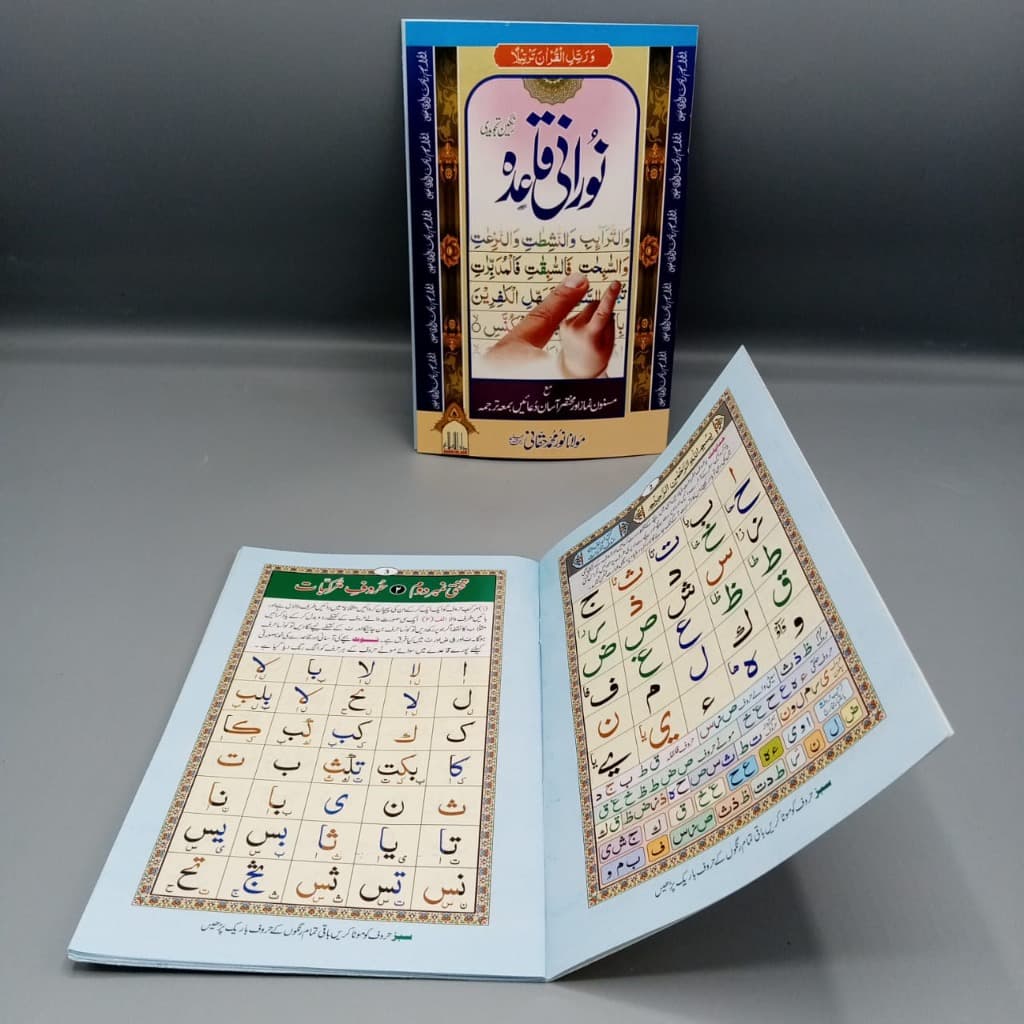
This text has been used for decades across Muslim communities worldwide, particularly in Arab countries and increasingly in online Quran instruction. While not the only method available, it has proven effective for building structured reading skills. The lessons are designed to be taught alongside a live teacher who provides feedback on pronunciation and corrects errors early on.
Why Is Noorani Qaida Important Before Reading the Quran?
Jumping directly into Quran reading without foundational preparation often leads to frustration, poor pronunciation habits, and slow progress. Noorani Qaida solves this by systematically building the skills needed for confident Quranic reading. Here is why this foundation matters.
1It Builds Arabic Letter Recognition
The Arabic alphabet contains 28 letters, many of which look unfamiliar to non-Arabic speakers. Noorani Qaida teaches each letter individually, helping learners recognize them quickly and accurately. This matters because when reading the Quran, you need to identify letters rapidly to keep pace with meaning.
Recognizing letters fluently means you are not stopping to puzzle out each symbol. Instead, your brain can move forward to understanding words and meaning. Without this automatic letter recognition, every word becomes a slow decoding process.
2It Teaches Basic Vowel Marks
Arabic uses three main vowel marks called "Harakat": Fathah (short 'a' sound), Kasrah (short 'i' sound), and Dammah(short 'u' sound). These marks tell you how to pronounce each letter. The Quran uses these marks, and understanding them is essential.
Noorani Qaida introduces these vowels gradually. Learners practice saying the same letter with different vowels, building muscle memory for correct pronunciation. This preparation makes reading Quranic text significantly easier because the marks are already familiar.
3It Teaches Learners How Letters Connect
Arabic letters change shape depending on their position in a word. The same letter looks different at the beginning, middle, or end of a word. Additionally, some letters connect to their neighbors while others stand alone.
Noorani Qaida provides extensive practice with letter joining (Murakkabat). Learners see how letters transform and connect, preparing them for real Quranic words where multiple letters flow together. Without this understanding, readers often stumble when encountering connected letter combinations.
4It Develops Pronunciation Awareness
Some Arabic sounds do not exist in English or other languages. These sounds involve specific throat and mouth positions called "Makharij" in Arabic. Sounds like ع (Ain), ح (Ha), خ (Kha), ص (Sad), ض (Dad), ط (Tah), and ق (Qaf) require attention and practice.
Noorani Qaida introduces these sounds early so learners can practice them consistently. A live teacher can listen and correct mouth position and air flow. By the time students reach Quranic text, these unfamiliar sounds are becoming natural rather than completely foreign.
5It Creates a Foundation for Tajweed
Tajweed is the science of proper Quranic recitation, covering rules about how letters connect, where to pause, how to emphasize certain sounds, and how to apply melodic patterns correctly. Tajweed rules make sense when learners already understand individual letters and basic pronunciation.
Noorani Qaida does not replace a complete Tajweed study course, but it provides essential groundwork. Beginners who skip foundational reading often find Tajweed lessons confusing because they are still learning how to pronounce individual letters while trying to grasp complex rules.
What Can Happen If a Beginner Skips the Basics?
Starting Quran reading without foundational instruction often creates practical problems that slow progress.
Learners may confuse similar looking letters. Arabic has several pairs of letters that differ only slightly, such as Baa and Taa, or Seen and Sheen. Without deliberate practice distinguishing them, readers make consistent errors.
Vowel mark confusion leads to inconsistent pronunciation. A learner might pronounce the same letter differently depending on the mark, struggling to develop reliable pronunciation habits. This inconsistency makes Quranic reading feel choppy and uncertain.
Many beginners guess at unfamiliar words rather than sounding them out. They might skip difficult pronunciations or rush through sections they do not understand. This approach prevents real learning and creates bad habits that are harder to fix later.
Without proper foundation, learners need to stop frequently while reading to figure out how to pronounce each word. This constant stopping breaks the flow of meaning and makes reading frustrating rather than rewarding.
It is important to note that learners with prior Arabic reading experience may not need to start from the very beginning. Someone who can already recognize letters but struggles with Quranic pronunciation might start at a different point. The key is matching the starting level to actual ability.
Is Noorani Qaida Only for Children?
No. Noorani Qaida is beneficial for anyone who cannot yet read Arabic fluently, regardless of age.
Children benefit from the structured, progressive approach. The lessons are designed for young learners, with clear progression and repetition that works well for developing brains. Many Quran schools introduce Noorani Qaida to children starting around age four or five.
Teenagers and adults can absolutely learn from Noorani Qaida. Starting later does not make it less effective. An adult learner who wants to read the Quran accurately is just as well served by foundational instruction as a child is.
New Muslims often begin with Noorani Qaida because they have no background in Arabic reading. Experienced practitioners of Islam who learned Quran orally but never learned to read Arabic also benefit from this text.
How Noorani Qaida Helps Children Learn Quran
For children, Noorani Qaida provides a gentle, confidence building introduction to Quranic reading.
Structured Progression & Repetition With Variation
The structured progression means children see letters they have learned before appearing in new contexts. This repetition with variation builds recognition without boredom. A child learns letter shapes, then sees those same letters joined together, then encounters them in actual Quranic words.
Bite-Sized Lessons for Young Attention Spans
Short lessons suit young attention spans. Rather than overwhelming a child with the entire Quran at once, Noorani Qaida breaks learning into manageable pieces. This approach builds confidence as children complete lessons and see their own progress.
Interactive Sound Modeling & Ear Training
Sound practice is central to children's learning. Hearing a teacher pronounce sounds correctly and practicing them repeatedly helps children develop accurate pronunciation naturally. This is especially important for sounds that do not exist in their native language.
Parents often see that children who complete Noorani Qaida move into Quran reading classes with far fewer struggles than children who skip it. The foundation prevents many common problems before they start.
Can Adults Start Noorani Qaida From Zero?
Absolutely. Many adults successfully learn Noorani Qaida and go on to read the Quran beautifully.
Starting as an adult beginner is not embarrassing or unusual. Adults often bring discipline and motivation that accelerates their progress. An adult learner's brain works differently than a child's, but adult brains are perfectly capable of learning new languages and reading systems.
The only real challenge is consistency. Adults juggle work, family, and other responsibilities, so finding regular practice time requires planning. But learners who commit to even 20 to 30 minutes a few times per week see noticeable progress.
There is no age limit for learning. You will not find a rule saying "students must be under 50" or "too late to start at 65." People in their seventies and eighties have successfully learned to read the Quran. The process looks the same regardless of starting age.
What Does a Student Usually Learn Through Noorani Qaida?
Noorani Qaida follows a clear progression that builds reading skills step by step:
1. Individual Arabic Alphabet (Huruf Mufradat)
Lessons typically begin with the Arabic alphabet in isolation. Students learn each letter's name, shape, and sound. Early lessons use visual layout and repetition to make learning engaging and memorable.
2. Basic Short Vowels (Harakat)
Next, learners encounter the three basic vowel marks individually (Fathah, Kasrah, Dammah). They practice the same letter with each vowel mark, hearing the sound changes and practicing pronunciation.
3. Tanween, Sukoon, and Shaddah
Tanween is introduced, which adds a doubled vowel sound at the end of words. Sukoon, which indicates the absence of a vowel, comes next. Shaddah, which doubles and stresses a letter, is also practiced thoroughly.
4. Compound Connected Letters (Huruf Murakkabat)
Learners then encounter letters joined together, starting with simple two-letter combinations. Gradually, combinations become more complex, building toward actual words.
5. Word Reading & Quranic Sentences
By the end of Noorani Qaida, students can read simple Arabic words and basic sentences. They have developed pronunciation accuracy and letter recognition speed. Most importantly, they have built the confidence needed to approach Quranic text without overwhelming anxiety.
When Should You Move From Noorani Qaida to Quran Reading?
Readiness to begin Quran reading goes beyond simply reaching the last page of Noorani Qaida. Understanding matters more than completion speed.
Key Signs of Readiness to Progress:
- Effortless Letter Recognition: Consistently recognizing letters without hesitation. When letters no longer require conscious decoding, the reader can focus on flow and meaning.
- Automatic Letter Joining: Letter joining feels natural and automatic, not like a puzzle to solve on every word.
- Instant Vowel Recognition: Looking at a vowel mark (Fathah, Kasrah, Dammah, Tanween) and instantly knowing the sound without thinking.
- Independent Sounding Out: Attempting to sound out unfamiliar words using learned rules, rather than guessing or relying on the teacher for every syllable.
- Consistent Makharij & Self-Correction: Applying Makharij articulation points and naturally self-correcting when noticing a pronunciation slip.
- Receptiveness to Correction: Listening to teacher feedback, trying again willingly, and remembering corrections in subsequent passages.
Noorani Qaida vs Directly Starting the Quran
To help you decide the best learning pathway for yourself or your child, here is a breakdown comparing both methods:
| Approach | What the Learner Experiences | Usually Suitable For |
|---|---|---|
Start with Noorani Qaida | Systematic introduction to letters, vowels, and pronunciation. Structured progression. Clear milestones. Time to build accuracy. Teacher feedback on small, manageable sections. | Complete beginners. Non-Arabic speakers. Anyone building reading from zero. Learners prioritizing pronunciation accuracy. |
Start Directly with Quran | Immediate exposure to Quranic text. Faster progression for some. Exposure to authentic language from day one. | Learners who read Arabic already. Students with prior Quranic background. Those seeking speed over foundational accuracy. |
This comparison shows both approaches have merit. The best choice depends on your current ability. A complete beginner jumping to Quranic text faces significant challenges with unfamiliar letters, vowel marks, and pronunciation. Someone who already reads Arabic fluently may find Noorani Qaida unnecessary. The goal is matching the method to the learner, not forcing everyone through the same path.
How to Make Noorani Qaida Practice More Effective
Consistent practice is more valuable than occasional long sessions. Practicing 20 minutes daily outperforms practicing two hours once a week.
Read lessons aloud rather than silently. Hearing your own voice engages different parts of your brain and reinforces correct pronunciation.
When you encounter difficult letters, practice them specifically. Spend extra time with sounds that feel unfamiliar or uncomfortable. Do not rush past struggle.
Listen carefully to your teacher's pronunciation and feedback. When a teacher corrects you, immediately try again using the guidance given.
Avoid rushing through pages. The goal is understanding, not simply finishing. A student who spends two weeks on one page, mastering it thoroughly, learns more than a student who rushes through ten pages carelessly.
Review previous lessons regularly. Bringing back earlier material prevents forgetting and reinforces skills as you learn new ones.
Frequently Asked Questions
What is Noorani Qaida used for?
Noorani Qaida teaches beginners to read Arabic letters, understand vowel marks, connect letters, and develop accurate pronunciation. It prepares students to read Quranic text fluently.
Is Noorani Qaida necessary for beginners?
For most complete beginners, yes. Noorani Qaida provides essential foundational skills. Learners with prior Arabic reading ability may not need it.
Can adults learn Noorani Qaida?
Absolutely. Adults successfully learn Noorani Qaida at any age. Consistency matters more than age.
Should children learn Noorani Qaida before the Quran?
Most Quran educators recommend Noorani Qaida for children starting from zero. It builds confidence and prevents bad pronunciation habits.
How long does it take to learn Noorani Qaida?
Completion time varies significantly. A child practicing daily might complete it in several months. An adult balancing other responsibilities might take six months to a year or longer. Consistency matters more than speed.
Is Noorani Qaida the same as Tajweed?
No. Noorani Qaida teaches basic letter recognition and pronunciation. Tajweed is the advanced science of proper Quranic recitation. Noorani Qaida builds the essential foundation for Tajweed study.
Can I learn Noorani Qaida online?
Yes. Online learning works well when taught with a live teacher who hears your pronunciation and provides feedback. Written materials alone are less effective for pronunciation learning.
Do I need to memorize Noorani Qaida?
No. Understanding and applying the lessons matters more than memorizing pages. You should recognize letters and apply vowel marks, not recite the text from memory.
Start Your Quran Reading Journey With a Strong Foundation
Learning to read the Quran is one of the most rewarding spiritual practices, but starting without proper foundation creates unnecessary difficulty. Noorani Qaida removes obstacles by building essential skills systematically. Whether you are a child discovering Arabic letters for the first time or an adult returning to learning after years away, foundational instruction gives you the tools to read accurately and with confidence.
If you or your child are starting from the beginning, structured Noorani Qaida instruction provides the foundation needed to move forward successfully. OQTutor offers one-on-one online Quran classes for children and adults with flexible scheduling. Our teachers provide personalized feedback on pronunciation and letter recognition, adapting to your learning pace.
Master the Basics of Quran Reading with OQTutor
Explore our Noorani Qaida course or book a free trial lesson to see how our qualified tutors can guide your Quranic journey with patience and precision.