The Heart of Islamic Parenting in Non-Muslim Countries
The role of parents in Islamic education in Western and non-Muslim societies extends far beyond Quran lessons and memorizing rules. It is about living Islamic values as a role model, cultivating a warm home where curiosity and sincere questions are embraced, building sustainable daily habits, and partnering with qualified teachers so children flourish with both confident faith and civic respect.
Raising children with a strong Islamic foundation can be rewarding, but it also brings unique responsibilities for Muslim families living in non Muslim countries. Children may attend schools where Islam is not part of the curriculum, make friends from different religious backgrounds, and encounter ideas that differ from what they learn at home. Parents must help them understand their faith while preparing them to participate confidently and respectfully in wider society.
The role of parents in Islamic education goes beyond teaching children to read the Quran or memorize daily duas. It includes demonstrating Islamic values, encouraging questions, building consistent religious habits, and helping children understand how Islam relates to everyday life.
With patience, practical guidance, and support from qualified teachers, parents can make Islamic education a natural part of family life.
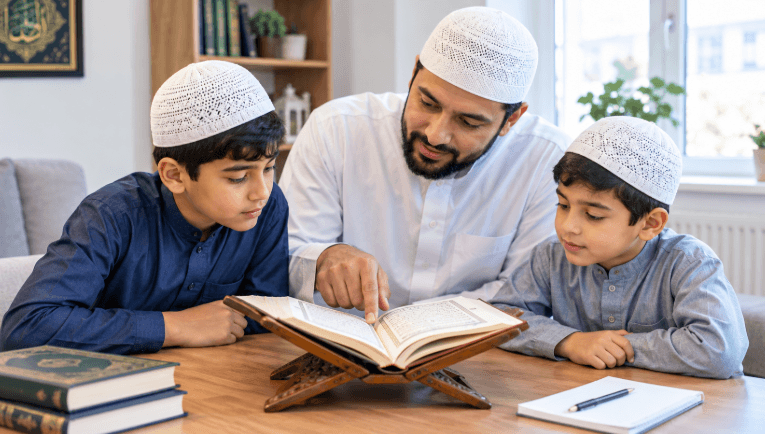
Why Islamic Education Matters for Muslim Children Abroad
Islamic education helps children learn about their beliefs, worship, responsibilities, and moral values. It gives them opportunities to understand their relationship with Allah and develop the knowledge they need to practice Islam thoughtfully.
For Muslim children growing up in a non Muslim country, this learning often takes place across several environments. They may study mathematics and science at school, learn about different cultures from classmates, and explore Islamic teachings at home, in a mosque, or through online lessons.
These experiences do not have to conflict. Parents can teach their children to respect people of different backgrounds while remaining connected to their own religious beliefs.
يَا أَيُّهَا الَّذِينَ آمَنُوا قُوا أَنفُسَكُمْ وَأَهْلِيكُمْ نَارًا
“O you who have believed, protect yourselves and your families from a Fire whose fuel is people and stones...”
The Quran provides an important foundation for parental responsibility. In Surah At Tahrim, verse 6, Allah instructs believers to protect themselves and their families from the Fire. This verse reminds Muslim families of the seriousness of spiritual responsibility and the importance of guiding their households according to Islamic teachings.
Parents can begin fulfilling this responsibility through everyday actions, honest conversations, and a commitment to learning together.
1. Parents Are a Child's First Islamic Teachers
Children often learn their earliest lessons about religion by watching the adults around them. They notice how parents speak, respond to difficulties, treat other people, and make decisions.
A parent who explains the importance of honesty but regularly tells small lies sends conflicting messages. Similarly, telling children to pray while treating prayer as an inconvenience may make the practice seem less meaningful.
Parents can strengthen Islamic education by making their own actions consistent with the values they teach. For example, they can demonstrate honesty when dealing with others, show patience during disagreements, apologize after making mistakes, and express gratitude for everyday blessings.
These experiences help children connect Islamic teachings with real situations rather than viewing religion as a list of rules to memorize.
- Demanding prayer while delaying or skipping one's own.
- Preaching patience while shouting when stressed.
- Insisting on truthfulness while telling “convenient” lies.
- Praying promptly with visible tranquility and calm.
- Pausing, taking a breath, and speaking with gentleness.
- Apologizing sincerely when you make an error or lose temper.
Parents do not need to know every answer. When a child asks a difficult question, admitting uncertainty and finding a reliable answer together can demonstrate intellectual honesty and a lifelong commitment to learning.
2. Make Quran Learning Part of Everyday Family Life
The Quran should have a meaningful place in a Muslim child's education. However, children need more than occasional lessons to develop a lasting connection with it.
Parents can establish a simple routine that fits their family's schedule. They might read a short passage together, revise a memorized surah, learn the meaning of a few Arabic words, or discuss a lesson from a Quranic story.
Parents should also distinguish between Quran reading and understanding. Correct pronunciation and Tajweed rulesare important, while learning the meanings of verses helps children explore the Quran's guidance at an age appropriate level.
Younger children may benefit from short lessons, repetition, and encouragement. Older children can gradually explore translations, ask questions about the verses they study, and discuss how Islamic teachings apply to their lives.
When parents cannot teach Arabic pronunciation or Tajweed confidently, they can seek guidance from a qualified Quran teacher rather than allowing incorrect habits to continue.
3. Teach Islamic Values Through Real Examples
Islamic education includes character development alongside religious knowledge. Children need opportunities to understand how values such as honesty, kindness, patience, justice, and responsibility influence their choices.
Parents can introduce these values through ordinary family situations:
If a child damages something belonging to a friend, parents can discuss taking responsibility, replacing it, and making amends sincerely.
If siblings argue, parents can encourage respectful communication, emotional regulation, and impartial, fair conflict resolution.
If a child receives help from a teacher or neighbor, parents can explain the Islamic importance of expressing gratitude and returning goodwill.
These conversations make Islamic principles easier to understand because children can connect them with experiences they recognize.
Parents should also remember that children learn at different rates. A child who struggles to share, control frustration, or admit a mistake needs guidance and practice, not simply another lecture.
Compassion Over Condemnation
Islamic parenting works best when expectations remain clear and correction includes compassion. Children should understand that mistakes require responsibility, but mistakes also provide valuable opportunities to learn.
4. Help Children Understand Their Muslim Identity
Growing up in a non Muslim country can expose children to different religious traditions, social expectations, and cultural practices. Parents can help them understand their Muslim identity without teaching them to fear or disrespect people who believe differently.
Start by explaining the basic beliefs and practices of Islam in language your child understands. Discuss why Muslims pray, fast during Ramadan, give charity, and celebrate Eid. Encourage children to ask questions about their faith and explain unfamiliar practices to others when appropriate.
Parents should also prepare children for everyday situations. A child might wonder why classmates eat during Ramadan, why Muslims avoid certain foods, or why a family member wears a hijab. Calm, age appropriate explanations can help children respond confidently rather than feeling embarrassed about being different.
Respectful relationships with people of other faiths also matter. Parents can teach children to remain firm in their beliefs while treating classmates, teachers, and neighbors with kindness and fairness.
“A secure religious identity does not require hostility toward others. It grows through understanding, practice, and a supportive family environment.”
5. Build Consistent Islamic Habits at Home
A supportive home environment can make Islamic learning easier to maintain. Children benefit when religious practices form part of their normal routine instead of appearing only when parents become concerned about their behavior.
Families can begin with manageable habits, such as praying together when practical, reading the Quran regularly, reciting appropriate daily duas before meals and sleep, and discussing Islamic manners.
Parents should consider their children's ages, school schedules, and individual needs when planning these activities. A routine that fits the household is more sustainable than one that leaves everyone exhausted.
Ramadan offers opportunities to explain fasting, generosity, self discipline, and gratitude. Eid can help children experience the joy of worship, family relationships, and community celebrations. Parents can also involve children in charitable activities and age appropriate household responsibilities. These experiences connect religious values with practical choices.
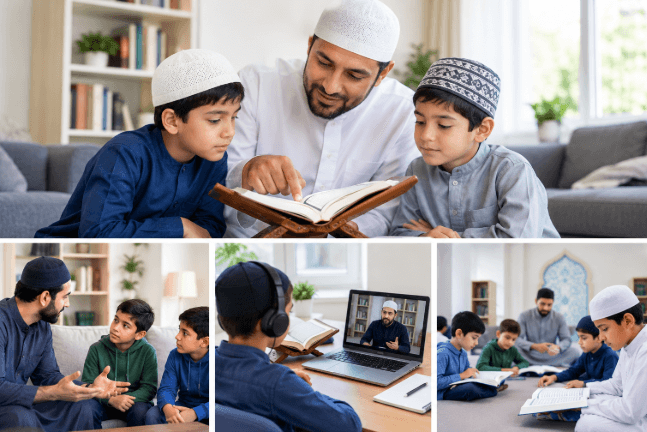
The goal is not to make every family moment a formal lesson. A warm home where people show respect, help one another, and remember Allah can reinforce Islamic values naturally.
6. Work With Qualified Quran and Islamic Studies Teachers
Parents remain central to a child's Islamic education, but they do not have to provide every lesson themselves. Qualified teachers can offer structured instruction, correct misunderstandings, and help children progress in areas that require specialist knowledge.
For families living far from a mosque or Islamic school, online Quran classes for kids provide a reliable, flexible way to access expert instruction.
What to Look for in a Quran Teacher or Academy
Regular communication between parents and teachers helps everyone understand the child's needs. Parents can reinforce lessons at home, while teachers can explain which skills need additional practice.
For example, a child learning Noorani Qaida may need support with Arabic letters and pronunciation before progressing to fluent Quran reading. Another child may read accurately but need help understanding basic Islamic Studies concepts.
A good learning plan considers the child's current abilities rather than comparing progress with siblings or classmates.
7. Connect Children With the Muslim Community
A sense of belonging can support children's religious learning. Mosques, Islamic centers, youth activities, and family gatherings can give children opportunities to meet other Muslims and participate in shared traditions.
Community involvement also helps children see that Muslim families have different backgrounds, languages, and cultures while sharing important religious beliefs and practices.
Parents can look for suitable local activities, Quran study circles, educational events, and supervised youth programs. When choosing activities, they should consider the quality of instruction, safeguarding arrangements, accessibility, and whether the environment suits their child.
Families without convenient access to a local Muslim community can explore reputable online learning groups or virtual educational events. Community participation should complement, rather than replace, a child's relationship with parents and individual learning needs.
8. Balance Islamic Education With School and Social Life
Children need time for schoolwork, sleep, recreation, friendships, family responsibilities, and religious learning. A realistic schedule helps parents maintain balance without making Islamic education feel like an endless list of assignments. (For detailed strategies, read our guide on balancing Quran learning with school and extracurricular activities.)
Start by reviewing the family's existing commitments. Choose suitable times for Quran lessons and home revision, then adjust the routine when school demands change.
Parents should also listen when children feel overwhelmed. A tired child may struggle to concentrate, and adding more study time does not automatically improve learning. Instead, break tasks into manageable steps, set realistic goals, and recognize effort alongside progress.
Children also need opportunities to ask questions about friendships, social expectations, and situations they encounter at school. Parents can use these conversations to explain Islamic principles while listening carefully to the child's perspective.
The aim is to help children develop understanding and responsible judgment, not merely follow instructions without knowing why.
9. Encourage Questions and Keep Communication Open
As children grow, their questions about Islam may become more complex. They may ask about prayer, religious differences, moral decisions, or why Muslims follow particular practices.
Parents should welcome sincere questions rather than treating curiosity as disobedience. Dismissing a question can discourage children from seeking clarification when they need it most.
- Listen attentively: Acknowledge what the child is genuinely asking without judgment or defensiveness.
- Use clear, age-appropriate language: Avoid overly academic terminology when speaking with younger children.
- Consult reliable scholars: If an answer requires specialist knowledge, turn to trusted educators or classical Islamic scholarship together.
Parents should also recognize that a question does not necessarily indicate a rejection of faith. Children often learn by testing ideas, seeking explanations, and comparing what they hear in different settings.
Open communication gives parents opportunities to correct misunderstandings, build trust, and help children develop a thoughtful understanding of Islam.
Conclusion
The role of parents in Islamic education in non Muslim countries extends far beyond Quran lessons and religious rules. Parents help children build a connection with Allah, develop good character, understand their Muslim identity, and apply Islamic teachings to everyday life.
The most effective approach combines personal example, consistent family habits, qualified instruction, community support, and honest communication. It also allows room for questions, mistakes, and gradual progress.
Parents do not need to create a perfect household or know every answer. They need to provide a caring environment, seek reliable knowledge, and remain actively involved in their children's learning.
With patience and a balanced approach, families can help children grow in Islamic knowledge while developing the confidence and respect they need to live positively in diverse societies.
Partner With Certified Online Quran Teachers for Your Family
OQTutor provides personalized 1-on-1 online Quran classes tailored for Muslim families living across the US, UK, Canada, Australia, and Europe. Our qualified male and female tutors teach Noorani Qaida, Tajweed, Hifz, and Islamic Studies with patience and care.
No credit card required • Flexible timings suited to school schedules • Male & female certified tutors
Trusted Sources to Support the Article
These verified sources support the religious and educational context of this article:
1. The Holy Quran, Surah At-Tahrim (66:6)
Read on Quran.comA foundational Islamic source establishing divine parental accountability and the duty to nurture one's family spiritually and morally.
2. Pew Research Center: Religion, Family and Children
Read the ResearchGlobal empirical research analyzing how families transmit religious identity, values, and practices across generations, including supplementary religious instruction outside the home.
3. Oxford University Press: Muslim Childhood: Religious Nurture in a European Context
Read Chapter OverviewAcademic research exploring formal and informal Islamic education, mosques, supplementary weekend madrasas, and identity formation within the domestic sphere in Western environments.
Frequently Asked Questions
Q:How can Muslim parents teach Islamic values to children in non-Muslim countries?
By setting a living personal example (Qudwah), creating consistent family routines like praying together, talking openly about daily moral situations, and explaining the reasoning behind Islamic practices with love and clarity.
Q:At what age should children start learning the Quran in the West?
Children can start listening to Quran from infancy and begin basic Arabic letter recognition through Noorani Qaida around ages 4 to 6. The key is gentle consistency, playfulness, and avoiding undue pressure.
Q:How can parents balance secular school with Islamic education without overwhelming kids?
Schedule short, regular learning sessions (such as 30 minutes, 2-3 times a week) rather than marathon weekend lessons. Adjust homework and Quran time around school exam periods and celebrate effort rather than demanding perfection.
Q:Should parents teach the Quran themselves or hire a qualified online tutor?
Both can work together. Parents provide daily encouragement and values at home, while qualified online teachers provide structured pronunciation (Tajweed), accurate phonetics, and impartial accountability.
Q:How do parents handle children's questions about other religions and cultures?
Welcome these questions with confidence. Explain that respecting people of other backgrounds is an authentic Islamic teaching, and clarify how our Islamic beliefs guide our own choices without looking down on others.

Qari Muhammad Imran
Reviewer & Senior ScholarAlimiyyah Graduate • Senior Quran & Islamic Studies Educator at OQTutor
Qari Muhammad Imran is a certified Islamic scholar and experienced teacher at OQTutor who has mentored hundreds of students and families living across North America, the UK, Europe, and Australia in Quran recitation, Tajweed, and foundational Islamic knowledge.